
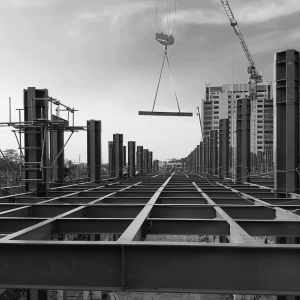
 A finished project can make construction look deceptively simple. Roads appear complete, utilities disappear underground, retaining walls stand in place, and buildings seem to have risen exactly where the drawings said they would.
In reality, projects are built in stages, and the order of those stages can affect safety, cost, access, coordination, and long-term performance. Construction sequencing is one of the less visible parts of engineering, but it can have a major influence on whether a project moves smoothly or becomes a series of avoidable complications.
At McNeil Engineering, thoughtful design means considering not only what should be built, but how the project can realistically get from existing conditions to the finished result.
The Final Design Is Only Half the Story
Engineering drawings typically show where everything is supposed to end up. They identify finished grades, utility locations, structural systems, pavement, drainage features, landscaping, and other permanent improvements.
Construction crews, however, have to reach that final condition one step at a time. Excavation may need to occur before utilities can be installed, temporary access may be required while permanent roads are incomplete, and one phase of work may depend entirely on another being finished first.
That sequence creates its own set of engineering questions. A design that works beautifully in its final form can still become difficult to construct if the path to completion has not been considered carefully.
Utilities Can Turn a Site Into a Puzzle
Underground infrastructure is a good example of why sequencing matters. Water, sewer, storm drainage, electrical systems, communications, and irrigation may all need to occupy limited space beneath the same property.
Some systems must be installed deeper than others, and access for excavation equipment can become more difficult as construction progresses. Installing one utility too early may block another, while completing pavement before underground work is finished can lead to unnecessary demolition and replacement.
Civil engineering coordination helps identify these relationships before they become field problems. The goal is to create a logical order that allows each system to be installed efficiently while preserving access for the work that follows.
Temporary Drainage Still Has to Work
Stormwater does not wait for construction to end.
A site may have a carefully designed permanent drainage system, but that system may not be fully functional during the early phases of construction. Existing vegetation may have been removed, grades may be changing daily, and unfinished surfaces can respond very differently to a heavy rain event.
Temporary drainage and erosion-control strategies help bridge the gap between the original site and the finished condition. Engineers and contractors need to think about where water will go at each phase rather than assuming the final drainage plan solves every intermediate condition.
This is especially important because the site is often most vulnerable while construction is underway.
Access Has to Evolve With the Project
Construction requires constant movement. Crews arrive, materials are delivered, heavy equipment moves across the property, inspectors need access, and emergency routes must remain available.
The best construction access route on day one may become impossible to use later once a building foundation, utility trench, or retaining wall occupies that area. This means access sometimes needs to evolve along with the project.
Thinking about circulation during construction can reduce conflicts and help prevent completed work from being damaged by equipment that still needs to reach unfinished areas. It can also make the site safer by separating different types of activity wherever possible.
Structural Work Often Depends on What Happens First
Sequencing can be just as important in structural engineering. A completed structure may be designed to distribute loads through a network of beams, columns, walls, foundations, and connections, but not all of those components exist simultaneously during construction.
Temporary conditions can therefore behave differently from the finished structure. Certain elements may require temporary bracing or support until the rest of the structural system is completed and capable of performing as intended.
Renovation projects can make this even more important. Removing an existing wall, beam, or structural component before new support is in place can create conditions that the finished design was never meant to experience.
Engineering must consider not only where loads ultimately travel, but how they are supported while the project is changing.
Phasing Can Keep Properties Operating
Many projects cannot simply close while improvements are completed. Businesses need to remain open, residents need access to their homes, medical facilities must continue operating, and public infrastructure may need to remain available throughout construction.
Phased construction allows work to progress while portions of a property stay functional. That may mean completing one parking area before closing another, maintaining temporary pedestrian routes, or coordinating utility interruptions so they occur at carefully planned times.
This type of project requires an understanding of operations as well as engineering. The finished design matters, but so does the experience of the people who must use the property while it is being built.
Existing Conditions Can Change the Plan
Construction has a way of revealing things that were difficult to see beforehand. An underground utility may be located differently than expected, subsurface conditions can vary, or an older structure may contain modifications that were never documented.
When new information appears, sequencing may need to change. The ability to adjust intelligently becomes important because altering one phase can affect several others that were scheduled to follow it.
Accurate surveying, field observations, communication, and experienced engineering judgment all help teams respond without losing sight of the overall project. Flexibility is especially valuable when the site itself provides new information.
Landscape Architecture Has Its Own Timing
Even landscaping has a sequence.
Trees, planting areas, irrigation, site furnishings, and finished hardscape usually arrive late in a project, but landscape architecture must be coordinated much earlier. Underground utilities, grading, drainage, lighting, and structural elements can all affect what can eventually be planted or installed.
Timing also matters because newly completed landscape areas can be vulnerable to damage from construction traffic. Installing them too early may create additional replacement or repair work.
Planning for landscape elements from the beginning while installing them at the appropriate stage helps protect both the design and the investment.
Good Sequencing Can Reduce Rework
Few things are more frustrating on a project than completing something only to remove or modify it shortly afterward. Rework consumes time, materials, labor, and budget without moving the project meaningfully closer to completion.
Some changes will always be unavoidable, but thoughtful sequencing can reduce unnecessary rework. Coordinated utility installation, realistic access planning, and clear communication between disciplines help teams understand what needs to happen before permanent work begins.
The result is not simply a faster project. It is a more deliberate one.
Engineering the Path to Completion
A project does not jump from a drawing to a finished development. It passes through dozens, sometimes hundreds, of intermediate conditions before reaching its final form.
Those stages deserve engineering attention too.
At McNeil Engineering, we believe strong project planning considers both the destination and the path required to get there. Civil engineering, structural engineering, surveying, landscape architecture, contractors, and owners all play a role in making that journey work.
A successful project is not only about designing the right final solution. It is also about making sure there is a practical, safe, and efficient way to build it.
