
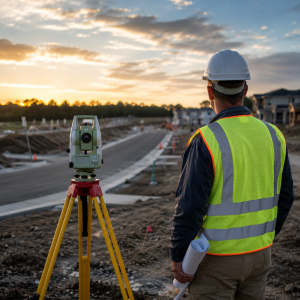
 When most people think about engineering, they think about precision.
They picture calculations, specifications, measurements, and plans that leave little room for error. And while precision remains at the heart of every successful project, there is another quality that has become increasingly important in today’s engineering environment.
Flexibility.
Communities are growing faster. Development patterns are changing. Technology is advancing. Infrastructure demands continue to evolve. As a result, modern engineering is no longer just about creating systems that work today. It is about creating systems that can adapt tomorrow.
At McNeil Engineering, we see this shift across nearly every type of project.
The World Changes Faster Than It Used To
A roadway designed twenty years ago often served a community that looked very different than it does today.
Traffic volumes have increased. New businesses have arrived. Residential developments have expanded. Infrastructure systems that once seemed oversized may now be approaching capacity.
The challenge for engineers is that many of these changes cannot be predicted with complete certainty.
Rather than designing for a single fixed future, modern engineering increasingly focuses on creating systems that can accommodate a range of future conditions. This approach helps communities adapt without requiring costly redesigns or major reconstruction projects.
Growth Rarely Happens Exactly as Planned
Master plans provide valuable guidance, but real-world growth rarely follows a perfectly predictable path.
A commercial corridor may develop faster than expected. Residential demand may shift to different areas. New transportation needs may emerge as population patterns change.
Projects that perform well over the long term are often the ones that were designed with enough flexibility to respond to these changes.
This does not mean overbuilding every system. Instead, it means making thoughtful decisions today that create opportunities for future adaptation.
Utility Infrastructure Requires Long-Term Thinking
Utility systems are among the best examples of why flexibility matters.
Water, sewer, stormwater, power, and communication infrastructure are typically designed to serve communities for decades. During that time, demand can change significantly.
Engineers must consider not only current usage but also future expansion, maintenance access, and potential upgrades. Small design decisions made during initial construction can have major impacts on how easily systems can evolve later.
The most successful utility networks are often the ones that quietly accommodate growth without requiring constant intervention.
Technology Is Driving New Expectations
The engineering industry itself is changing rapidly.
Advanced surveying tools, drone technology, digital modeling platforms, and data analytics are providing more information than ever before. These tools help teams make better decisions, but they also create new expectations for how projects are planned and managed.
Clients increasingly expect faster project timelines, greater transparency, and improved coordination between disciplines.
Flexibility allows engineering teams to embrace these advancements while continuing to deliver reliable results. The ability to adapt to new technologies has become a competitive advantage throughout the industry.
Resilient Design Is More Important Than Ever
Communities today face a wider range of challenges than in previous generations.
Weather events can be more intense. Development pressures can emerge quickly. Infrastructure systems are expected to perform under increasingly complex conditions.
This is why resilient design has become such a major focus within civil engineering.
Resilience is not simply about making systems stronger. It is about creating systems that can continue functioning when conditions change. Flexible infrastructure is often more resilient because it can adjust to new demands rather than failing under them.
The Human Element Cannot Be Ignored
Engineering ultimately exists to serve people.
Population shifts, transportation habits, work patterns, and community priorities all influence how infrastructure is used. These factors continue evolving over time.
The most effective projects account for human behavior as much as technical requirements. Engineers must think about how people will interact with spaces, how those interactions may change, and how infrastructure can continue supporting communities in the future.
This broader perspective helps create projects that remain useful and relevant long after construction is complete.
Planning for What Comes Next
One of the most valuable questions engineers can ask is simple.
What happens next?
What happens when traffic volumes increase? What happens when a property expands? What happens when technology changes or community needs evolve?
Projects that answer these questions early are often better positioned for long-term success. They require fewer modifications, experience fewer disruptions, and provide greater value throughout their lifespan.
Engineering for the Future
Engineering will always require precision. Accurate data, thoughtful design, and careful planning remain essential.
But the projects that thrive in the coming decades will likely be the ones that combine precision with adaptability.
At McNeil Engineering, we believe great engineering is not just about solving today’s challenges. It is about creating infrastructure, systems, and communities that can respond to tomorrow’s opportunities as well.
Because the future rarely unfolds exactly as expected. The best engineering prepares for that reality from the very beginning.
