
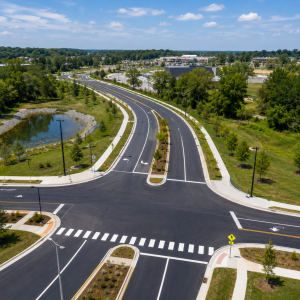
 The Hidden Science Behind Every Successful Road
Most people experience civil engineering every day without thinking about it.
They drive to work, visit a shopping center, walk through a neighborhood park, or travel down a newly completed roadway. To most people, these are simply places and routes that help them get from one destination to another.
For civil engineers, however, every one of those experiences is the result of hundreds of decisions made long before construction ever began.
Roadways are one of the best examples.
A road may appear simple on the surface, but beneath the pavement lies an enormous amount of planning, coordination, and engineering designed to ensure safety, efficiency, and long-term performance.
A Road Is More Than Pavement
When people think about road construction, they often picture asphalt, striping, and traffic signs. Those visible components are important, but they represent only a small portion of the engineering involved.
Before a single layer of pavement is installed, engineers evaluate site conditions, traffic demands, drainage requirements, utility conflicts, environmental considerations, and future growth projections.
Each factor influences how the roadway will function both immediately and years into the future.
The goal is not simply to build a road. The goal is to create infrastructure that continues performing under changing conditions and increasing demand.
Designing for Traffic That Does Not Exist Yet
One of the biggest challenges in civil engineering is planning for future conditions.
The traffic volume on a roadway today may look very different ten years from now. New residential developments, commercial growth, and population increases can dramatically change how infrastructure is used.
Because of this, engineers often design systems that can accommodate future growth rather than simply meeting current needs.
This forward-thinking approach helps communities avoid costly upgrades and major disruptions later. It also creates infrastructure that remains functional as surrounding areas evolve.
Good civil engineering is often measured not by how well something works today, but by how well it continues working tomorrow.
Water Is Always Part of the Conversation
Ask many civil engineers what keeps them awake at night, and drainage is likely to be high on the list.
Water affects nearly every aspect of infrastructure performance. Poor drainage can damage pavement, accelerate erosion, impact utilities, and create safety concerns for drivers and pedestrians.
That is why drainage planning is integrated into nearly every civil engineering project.
Engineers evaluate slopes, runoff patterns, stormwater systems, retention areas, and surrounding environmental conditions to determine how water should move through a site.
When drainage works properly, most people never notice it. When it fails, everyone does.
The Importance of What Happens Underground
One of the most overlooked aspects of roadway projects is what exists beneath the surface.
Water lines, sewer systems, storm drains, communication networks, and power infrastructure all occupy valuable space underground. Civil engineers must coordinate these systems carefully to ensure they function together without creating conflicts.
In many cases, underground infrastructure requires as much planning as the roadway itself.
Successful projects depend on understanding how these systems interact and how future maintenance can be performed efficiently.
The visible roadway may be what people use every day, but the hidden infrastructure often determines how well it performs.
Safety Is Designed Into Every Decision
Roadway safety extends far beyond speed limits and traffic signals.
Lane widths, intersection geometry, sight distances, pedestrian crossings, lighting, signage placement, and roadway curvature all contribute to the safety of a transportation network.
Many of these elements are designed to influence driver behavior without drivers even realizing it.
Civil engineering often works best when it quietly guides people toward safer decisions through thoughtful design.
These considerations help reduce risk while creating roadways that feel intuitive and easy to navigate.
Civil Engineering Shapes Communities
Roadways do more than move vehicles. They influence economic development, accessibility, and community growth.
Businesses depend on reliable transportation access. Neighborhoods rely on safe connections between homes, schools, and public spaces. Emergency services depend on infrastructure that functions efficiently under pressure.
Because of this, roadway projects often have impacts that extend far beyond transportation itself.
Civil engineering helps create the framework that allows communities to grow and thrive.
Looking Beyond Construction
One of the most important aspects of civil engineering is understanding that a project’s life begins after construction is complete.
Maintenance, durability, future expansion, and long-term performance all influence design decisions made during planning.
Engineers must think beyond opening day and consider how infrastructure will function years or even decades later. At McNeil Engineering, that long-term perspective guides every civil engineering project we undertake.
Because successful infrastructure is not defined by how it looks when construction ends. It is defined by how well it serves the community long after the ribbon is cut. Contact us today to learn more!
